
Contents
After experiencing water damage, you’re likely concerned about mold growth. Acting quickly is crucial, as mold can develop within 24-48 hours if conditions are right. Understanding the first steps to take, how to identify mold, and effective drying methods can make all the difference. You’ll also want to know when to seek professional help to ensure a safe environment. So, what are the best practices for preventing mold after water damage?
Key Takeaways
- Act quickly to dry out affected areas using fans and dehumidifiers to reduce moisture levels and prevent mold growth.
- Clean and disinfect surfaces in damp areas with mold-killing solutions to eliminate potential mold spores.
- Repair leaks in plumbing or roofing promptly to eliminate ongoing moisture sources that promote mold development.
- Use mold-resistant products, such as paints and drywall, to inhibit mold growth in susceptible areas of your home.
- Ensure proper ventilation throughout the home, especially in kitchens and bathrooms, to maintain lower humidity levels and discourage mold.
What Are the First Steps to Take After Water Damage?
When you experience water damage, acting quickly is essential to minimize further issues.
Start by ensuring your safety; turn off the electricity in affected areas and wear protective gear. Next, stop the source of the water if possible, whether it’s a leak or a flood. Remove any standing water using pumps or wet vacuums to prevent additional damage.
Once the area is clear, dry out surfaces and belongings as thoroughly as you can. Open windows, use fans, or dehumidifiers to accelerate the drying process.
Remove soaked materials like carpets or drywall, as they can harbor mold. Document the damage with photos for insurance purposes.
Finally, consult professionals if the damage is extensive or if you’re unsure about the next steps. Taking these initial actions can greatly reduce the risk of mold growth and help restore your home effectively.
How Can I Identify Signs of Mold Growth?
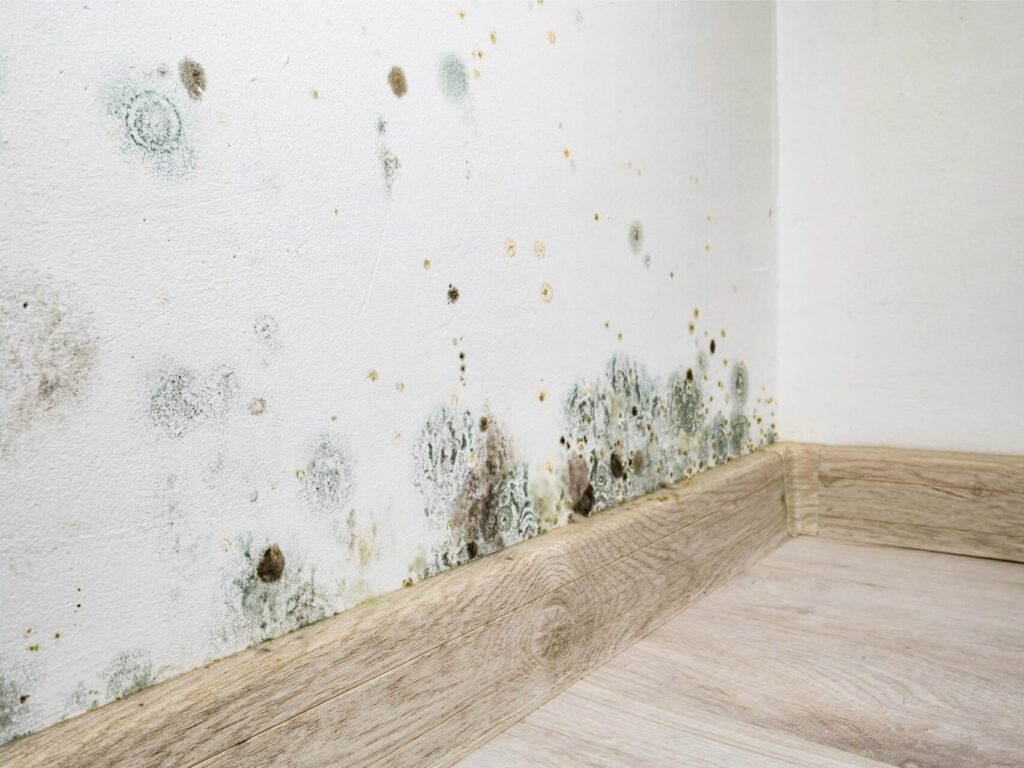
How can you tell if mold is starting to take hold in your home? Look out for visible signs like black, green, or white patches on walls, ceilings, and floors.
Mold often appears in damp areas, especially near leaks or water damage. You might also notice a musty odor, which is a strong indicator of mold growth.
Pay attention to your health, too; if you or your family members experience unexplained allergies, respiratory issues, or skin irritations, it could be related to mold.
Additionally, check for water stains or discoloration on surfaces, which may signal moisture issues conducive to mold.
Remember to inspect hidden areas, like behind appliances or under sinks, where mold can thrive out of sight.
If you identify any of these signs, act quickly to address the moisture problem and prevent further growth. Being proactive helps ensure a safe and healthy home for everyone.
What Methods Are Effective for Drying Out Affected Areas?
Effective drying methods are essential in preventing mold growth after water damage. To tackle moisture efficiently, you can use a combination of natural and mechanical techniques.
| Method | Description |
|---|---|
| Air Circulation | Use fans or open windows to promote airflow. |
| Dehumidifiers | Employ these devices to absorb excess moisture. |
| Heat Sources | Apply heat to warm up affected areas, speeding up evaporation. |
Make sure to monitor humidity levels, aiming for below 60%. Regularly check for dampness in hidden spaces like basements or behind walls. If you’re dealing with large areas or persistent moisture, consider consulting professionals for thorough drying solutions. By implementing these methods, you’ll create an environment less conducive to mold growth, ensuring your space remains healthy and comfortable for you and your loved ones.
How Long Does It Take for Mold to Grow After Water Damage?
Have you ever wondered just how quickly mold can take hold after water damage? Mold can begin to grow in as little as 24 to 48 hours if conditions are right.
When water seeps into walls, floors, or furniture, it creates a perfect environment for mold spores to thrive. Factors like temperature, humidity, and the type of material affected play significant roles in this timeline. If you don’t take swift action to dry out the area, you could face considerable mold issues within just a couple of days.
That’s why it’s essential to address water damage immediately. Remove excess moisture and ensure proper ventilation to minimize the risk.
What Preventive Measures Can I Implement to Avoid Mold?
To effectively prevent mold growth after experiencing water damage, you should implement several key measures.
First, act quickly to dry out affected areas. Use fans, dehumidifiers, and open windows to promote airflow. Aim for humidity levels below 60%.
Next, clean and disinfect surfaces with mold-killing solutions, especially in damp areas like bathrooms and basements. Make sure you fix any leaks in plumbing or roofing to eliminate moisture sources.
Additionally, consider using mold-resistant products, such as paints and drywall, in areas prone to humidity.
Regularly inspect your home for signs of water damage or mold growth, and address issues immediately.
Finally, maintain proper ventilation throughout your home, particularly in kitchens and bathrooms.
When Should I Call a Professional for Mold Remediation?
If you notice signs of mold growth or have experienced extensive water damage, it’s vital to act quickly.
Additionally, if you’re facing health concerns related to mold exposure, don’t hesitate to call a professional for remediation.
Addressing these issues promptly can help safeguard your home and well-being.
Signs of Mold Growth
When you notice a musty odor or see dark spots on walls and ceilings, it’s important to take immediate action, as these can be early signs of mold growth.
Other indicators include peeling paint, dampness in the air, or water stains. If you or your family members experience unexplained allergies, sneezing, or respiratory issues, mold could be the culprit.
It’s vital to address these signs promptly. If mold covers a large area, or if you’re uncertain about its extent, call a professional for mold remediation.
Ignoring these signs can lead to more significant health risks and structural damage. Your home should be a safe space, so don’t hesitate to seek help when needed.
Extensive Water Damage
Noticing the signs of mold growth, such as musty odors or dark spots, can indicate that extensive water damage has occurred.
If you’re uncertain about the severity of the situation, consider these factors before calling a professional for mold remediation:
Size of the affected area: If it’s larger than 10 square feet, it’s time to get help.
Duration of water exposure: If it’s been more than 24-48 hours since the water damage, act quickly.
Source of water: Contaminated water sources, like sewage, require professional intervention.
Visible mold growth: If you see mold spreading, don’t hesitate to call an expert.
Taking prompt action can help protect your home and create a healthier environment for you and your loved ones.
Health Concerns and Risks
Understanding the health concerns associated with mold exposure is essential, especially after water damage. Mold can trigger allergic reactions, respiratory issues, and even more severe health problems in some individuals.
If you notice a musty smell, visible mold growth, or experience unexplained health symptoms, it’s time to act. You should call a professional for mold remediation if the affected area exceeds 10 square feet, if the mold is in hard-to-reach places, or if you have underlying health conditions like asthma or weakened immunity.
Professionals have the expertise and equipment to safely remove mold and prevent recurrence, ensuring a healthier environment for you and your loved ones.
Don’t hesitate to seek help; your well-being is worth it.
Summary
Swift and strategic steps are essential to stave off stubborn mold after water damage. By drying out affected areas, disinfecting surfaces, and implementing preventive practices, you can create a cleaner, healthier environment. Remember, if mold persists or spreads beyond a small space, seeking professional help is wise. Stay proactive and prioritize prevention to protect your property from potential problems. A commitment to cleanliness can keep your home mold-free and safe.
Recent Posts
10 Tips for Mold Remediation After Flooding
Flooding can lead to rapid mold growth, which poses serious health risks and damages your
3 Best Mold Remediation Strategies After Flood Damage
After flood damage, addressing mold growth is essential for your health and property. You need
Effective Mold Remediation After Flood Damage
Have you ever wondered just how quickly mold can take hold after a flood? The