
Contents
Mold cleanup requires a methodical approach to ensure safety and effectiveness. You need to start by evaluating the severity of the infestation and taking necessary precautions to protect yourself. Containing the area is essential to prevent spores from spreading. Once you’ve set up a controlled environment, you can apply specific cleaning techniques tailored to the situation. Understanding these steps is critical for a successful cleanup and long-term prevention. What comes next might surprise you.
Key Takeaways
- Wear protective gear, including gloves, goggles, and an N95 respirator mask, to ensure safety during mold cleanup.
- Seal off contaminated areas with plastic sheeting to contain mold spores and limit cross-contamination.
- Use effective cleaning solutions, such as vinegar and baking soda for light mold or chemical solutions for heavy infestations.
- Maintain proper ventilation by opening windows and using fans to reduce airborne spores during the cleanup process.
- Regularly inspect and control humidity levels, keeping them below 60% to prevent future mold growth.
Assessing the Mold Situation
How do you know if you have a mold problem? Begin by employing effective mold identification methods.
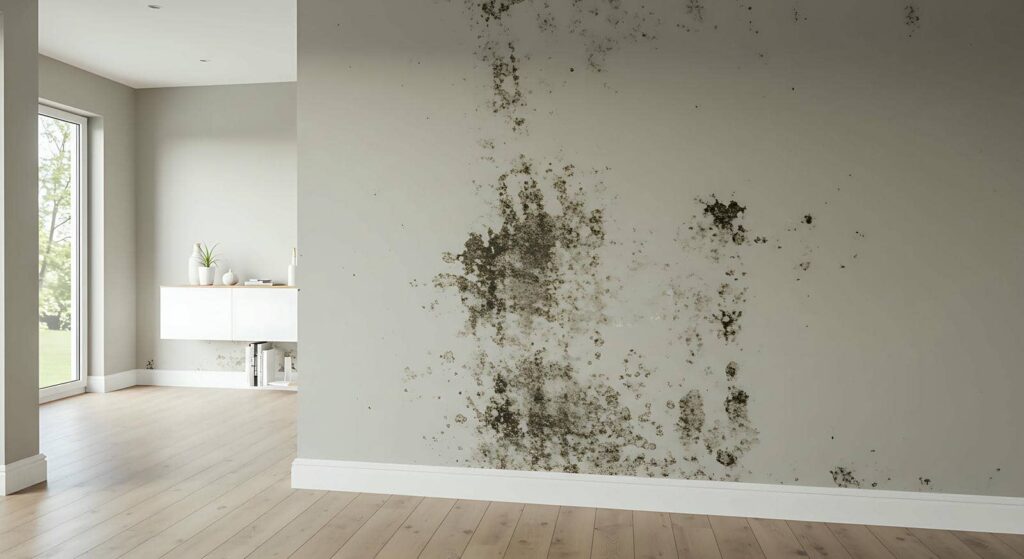
Look for visible signs like discoloration on walls, ceilings, or hidden spaces. Pay attention to musty odors, which often indicate mold growth.
Additionally, assess environmental factors that contribute to mold presence, such as humidity levels and water leaks.
Using a hygrometer, you can measure indoor humidity; levels above 60% create ideal conditions for mold.
Check areas prone to moisture, like bathrooms and basements, as these are common breeding grounds.
If you suspect mold but can’t see it, consider using mold test kits available in stores or online.
These kits can help you determine the presence of mold spores in your environment.
Safety Precautions During Cleanup
Once you’ve identified a mold problem, prioritizing safety during the cleanup process is essential. Proper safety precautions help protect your health and maintain air quality.
Here are four key practices to follow:
Wear Protective Gear: Use gloves, goggles, and an N95 respirator mask to shield yourself from mold spores and irritants.
Ensure Ventilation: Open windows and use fans to improve air circulation, reducing airborne contaminants while you work.
Limit Exposure: If possible, avoid the affected area and keep others away, especially those with respiratory issues.
Monitor Air Quality: Use an air quality monitor to track levels of mold spores in the environment, ensuring a safe cleanup space.
Containing the Affected Area
Containing the affected area is essential to prevent mold spores from spreading to other parts of your home. Start by using mold barriers, such as plastic sheeting, to seal off the contaminated zone.
Make certain to cover windows, doors, and vents to minimize airflow. You should also create a negative-pressure environment by using fans to direct air out of the area, which helps contain spores.
Implement containment strategies by designating a specific entry and exit point for anyone entering the area. This will limit cross-contamination and help maintain a clean environment.
Remember to wear appropriate personal protective equipment (PPE) when working within the contained space.
Regularly inspect the barriers during the cleanup process to ensure they remain intact, as even a small breach can allow mold spores to escape.
Effective Cleaning Techniques
Before you start cleaning mold, prioritize your safety by wearing appropriate protective gear, including gloves and masks.
You’ll need to select the right cleaning solutions that effectively eliminate mold while being safe for your environment.
Understanding these techniques ensures a thorough and safe cleanup process.
Safety Precautions First
While tackling mold cleanup, prioritizing safety precautions is vital to protect yourself and others in the environment.
Mold hazards can pose serious health risks, so using the right personal protective equipment (PPE) is essential. Here are four key safety measures to follow:
Wear a mask: Use an N95 respirator to filter out mold spores.
Use gloves: Choose non-porous gloves to prevent skin contact with mold.
Protect your eyes: Safety goggles can shield your eyes from mold particles.
Ventilate the area: Maintain proper airflow to minimize inhalation of spores during cleanup.
Proper Cleaning Solutions
To effectively eliminate mold, it’s essential to select the right cleaning solutions that target fungal growth without causing harm to surfaces or individuals. You can choose between natural remedies and chemical solutions, depending on the severity of the infestation and the surfaces involved.
| Type of Solution | Ingredients | Best Use |
|---|---|---|
| Natural Remedies | Vinegar, baking soda, tea tree oil | Light mold on non-porous surfaces |
| Chemical Solutions | Hydrogen peroxide, bleach | Heavy infestations on porous surfaces |
| Combination | Vinegar and baking soda mix | General cleaning and prevention |
| Prevention | Essential oils or natural sprays | Ongoing mold prevention |
Drying and Dehumidifying the Space
As you tackle mold cleanup, drying and dehumidifying the space is essential for preventing further growth.
Effective humidity control and airflow management will ensure a healthier environment.
Here are four key steps to follow:
Ventilate: Open windows and doors to enhance airflow. This helps reduce moisture levels naturally.
Use Dehumidifiers: Invest in portable dehumidifiers to remove excess humidity. Aim for a humidity level below 60%.
Fans: Set up fans to circulate air effectively. This promotes evaporation and speeds up the drying process.
Inspect Regularly: Check for damp areas consistently and address them quickly to avoid re-infestation.
Preventing Future Mold Growth
Preventing future mold growth requires a proactive approach to moisture control and environmental management.
Start by using mold-resistant materials in areas prone to dampness, like bathrooms and basements. These materials can greatly reduce the risk of mold proliferation.
Regular inspections of your home are essential. Check for leaks in plumbing, roofs, and windows, as even small amounts of moisture can lead to mold.
Confirm proper ventilation in areas such as kitchens and bathrooms; consider installing exhaust fans to reduce humidity levels.
Controlling indoor humidity is imperative; aim to keep it below 60%.
Using dehumidifiers can help maintain this level, especially in humid climates.
Frequently Asked Questions
How Can I Tell if Mold Is Toxic or Non-Toxic?
You can identify mold types using visual inspection, air sampling, or surface testing. Understanding mold health effects helps determine toxicity, as some molds produce mycotoxins that pose risks. Always consult professionals for accurate identification and safety.
What Should I Do if Mold Returns After Cleanup?
If mold returns after cleanup, reassess your mold prevention techniques and implement effective remediation strategies promptly. Monitor humidity levels, improve ventilation, and address any water leaks to ensure a lasting solution and maintain a healthy environment.
Can I Use Bleach to Clean Mold?
You can’t rely solely on bleach for mold cleanup due to its limited effectiveness. Consider alternatives like vinegar or hydrogen peroxide, which penetrate porous surfaces better, ensuring more thorough mold removal and preventing future growth.
How Long Does It Take to Fully Remove Mold?
Removing mold isn’t just about scrubbing; it’s a journey. Depending on mold growth factors, a mold removal timeline can span from a few days to weeks, ensuring thoroughness and preventing future infestations. Patience is key.
Will Mold Damage My Home’s Structure Permanently?
Mold can compromise your home’s structural integrity if left untreated. Implementing mold prevention strategies helps protect against damage, ensuring your home remains safe and stable. Regular inspections and moisture control are essential for long-term preservation.
Review
Tackling mold isn’t just a weekend DIY project; it’s a meticulous affair that demands your utmost attention. So, don your superhero gear, seal off your fortress, and wield your cleaning solutions like a pro. Remember, maintaining a low humidity level is as essential as remembering to feed your pet cactus. With these practices, you’ll eradicate the unwanted fungus and become the envy of all your mold-ridden neighbors. Happy cleaning!
Recent Posts
Why Does Insurance Cover Mold Removal Services?
Mold can be a hidden menace in your home, often growing unnoticed until it causes
Steps for Filing Emergency Water Damage Claims
When faced with emergency water damage, it’s essential to act swiftly and systematically. Start by
Navigating Water Damage Insurance Claims: A Guide
Steering through water damage insurance claims can be intimidating, especially when you’re faced with the